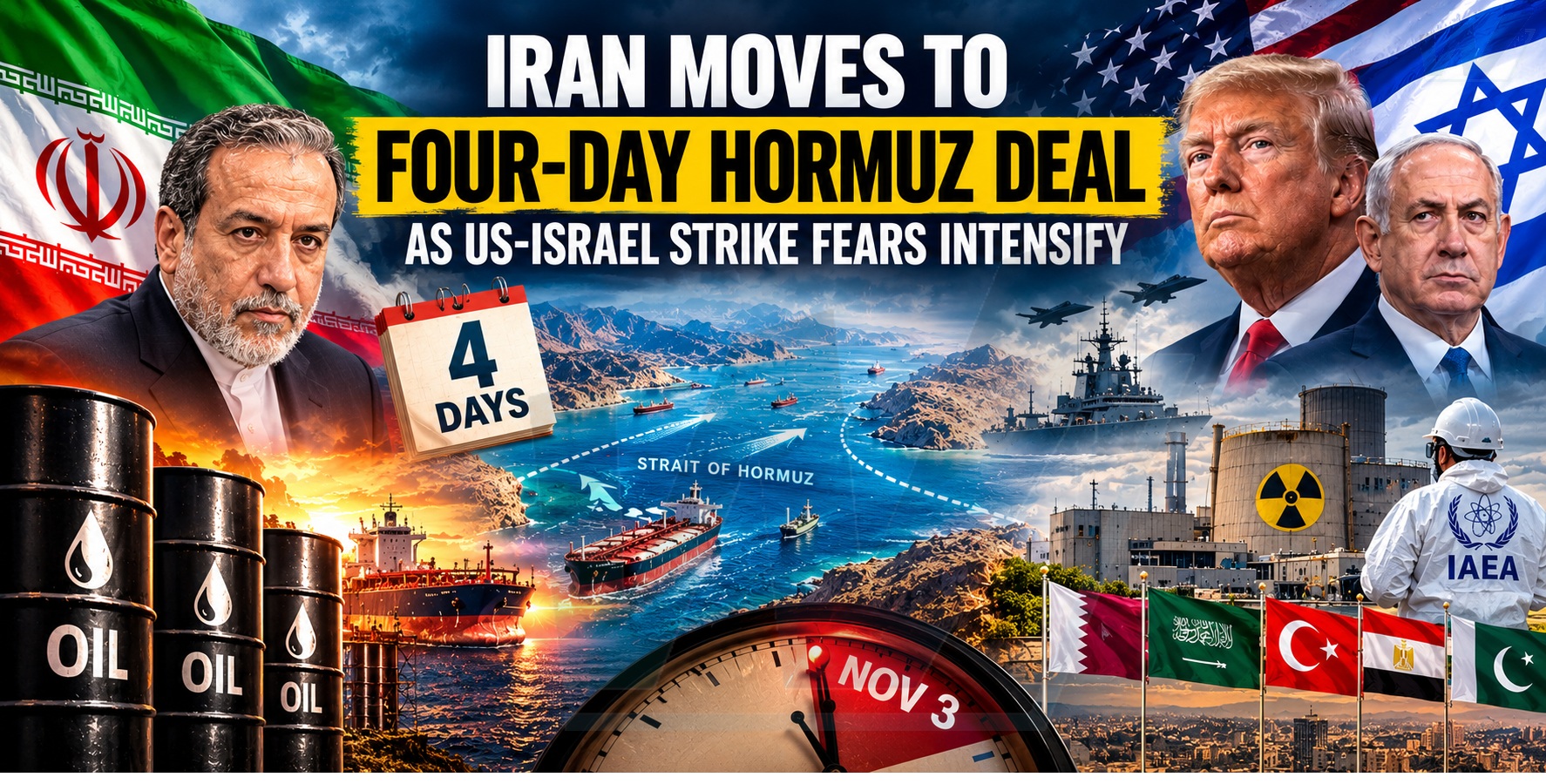
Iran is considering a four-day timeline to reopen the Strait of Hormuz as Qatar-led mediation seeks to avert renewed US-Israel strikes. Nuclear inspections, sanctions relief and the US blockade remain major obstacles.
Iran is signaling a faster path to peace, but a dangerous confrontation with the United States and Israel remains possible. As mediators race to revive negotiations, Tehran is offering to shorten its proposed timetable for reopening the Strait of Hormuz from seven days to four, while Washington demands progress on Iran’s nuclear programme.
The diplomatic clock is ticking toward November 3, when US midterm elections could mark a turning point in the conflict.
Four days to reopen a global energy lifeline
The latest diplomatic push centers on the Strait of Hormuz, one of the world’s most strategically important maritime corridors and a vital route for international oil and liquefied natural gas shipments.
According to The Guardian, Iran has offered to reduce the proposed reopening timetable to four days. Iranian Foreign Minister Abbas Araghchi has separately confirmed that Tehran is in close contact with mediators and is examining ways to implement its own seven-day confidence-building plan in less than a week.
The proposal is conditional. Iran wants Washington to lift its naval blockade of Iranian ports, ease restrictions on Iranian oil exports and release frozen Iranian funds. Tehran would then move toward restoring normal maritime traffic and resuming negotiations over a broader settlement.
But there is no confirmed agreement, and the competing proposals should not be confusing.
Qatar’s proposal hits a wall
Qatar, working alongside Pakistan and with support from Saudi Arabia, Egypt and Turkey, has emerged as a central intermediary between Washington and Tehran.
According to Reuters, Qatari mediators presented Iran with a new draft agreement intended to end the eight-month conflict. The framework reportedly envisages seven days of confidence-building measures, with both sides taking agreed steps and several countries potentially acting as guarantors.
Yet Tehran has pushed back. A senior Iranian official described Qatar’s latest ideas as unacceptable and insisted that Iran would not compromise on its nuclear policy.
The disagreement goes beyond the final wording of a deal. It concerns who must move first.
Washington wants Iran’s nuclear programme addressed from the outset. Tehran insists that the American blockade and restrictions on its oil exports must be addressed before it makes major concessions.
That sequencing dispute has repeatedly threatened to derail diplomacy.
Nuclear inspections emerge as a critical test
One of the most sensitive proposals under discussion would exchange limited US sanctions relief for renewed access by International Atomic Energy Agency inspectors to Iranian nuclear facilities damaged during previous strikes.
Mediators have also explored reviving the framework of an agreement reached between Iran and the IAEA in Cairo in September 2025. Implementation was suspended after UN sanctions were reimposed the following month.
The question is whether Tehran will permit inspectors to examine damaged facilities and provide assurances about its nuclear activities, while Washington offers enough economic relief to make an agreement worthwhile.
Iran’s enriched uranium stockpile remains another major obstacle. The United States has sought concessions over the material, while Tehran has resisted demands that it surrenders its strategic leverage.
No final agreement on inspections, uranium or sanctions relief has been announced.
The threat of a new military campaign
Diplomacy is unfolding against the backdrop of renewed military warnings.
Axios has reported that Israeli military chief Eyal Zamir and US Central Command chief Admiral Brad Cooper discussed preparations for possible strikes against Iran. US and Israeli officials cited in the reporting described the possibility of an intensive campaign targeting Iranian leadership, energy facilities, nuclear sites and other infrastructure.
The Associated Press has separately reported that US officials privately urged regional allies to prepare for possible renewed attacks after the November 3 midterm elections, as well as potential Iranian retaliation against energy infrastructure.
President Donald Trump has not publicly confirmed a final decision to launch a new campaign. He has acknowledged that negotiations are taking place through intermediaries while expressing uncertainty about whether they will succeed.
Saudi Arabia has reportedly urged Washington to give diplomacy more time, fearing that renewed fighting could spread and threaten the wider region.
A meeting in Turkey has been discussed as a possible diplomatic avenue, but its timing and format remain unconfirmed.
Hormuz puts the global economy in the firing line
The crisis is not confined to the negotiating table.
Disruptions in the Strait of Hormuz have put pressure on energy markets, maritime transport and the economies that depend on reliable Gulf exports. Qatar, a major liquefied natural gas producer, has a direct interest in restoring safe passage for commercial shipping.
Reuters reported on October 29 that oil prices eased as investors weighed diplomatic hopes against continuing security risks. Brent crude remained above $110 a barrel in the reported trading session, underlining how fragile the market outlook remains.
The danger extends beyond oil prices. Renewed attacks could threaten energy facilities, commercial vessels and regional infrastructure, while further interruptions to shipping would raise costs for businesses and consumers worldwide.
A narrow window before November 3
The next few days could determine whether the competing proposals develop into a workable framework or collapse under the weight of mutual distrust.
Iran wants sanctions relief, an end to the blockade and recognition of its conditions for reopening Hormuz. Washington wants progress on nuclear restrictions and verifiable international inspections. Mediators are trying to bridge the gap before the possibility of renewed military action becomes more immediate.
For now, the four-day timetable is a reported Iranian proposal, not a guarantee that the strait will reopen or that a ceasefire will hold.
The central question remains unanswered: can Tehran and Washington agree on the order of concessions before diplomacy gives way to another round of strikes?